UDYOG PORTAL

For any Query Email Us - info@eudyogaadhar.in
( Portal for MSME (Udyam) Registration )
Eudyogaadhar Logo

सूक्ष्म , लघु और मध्यम उद्यम | जीएसटी पंजीकरण परामर्श केंद्र

Udyam registration portal in india / उद्यम पंजीकरण पोर्टल

* With effect from 1st July 2020, MSME/ Udyog Aadhaar Registration will now be called as Udyam Registration.
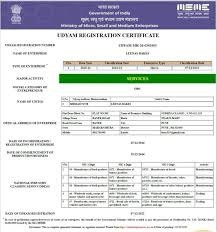
Certificate Benefits : - * Life Time Validity * Approved By MSME Department * For Open Current Bank Account * Business Registration Proof * Collateral Free Loan

Udyog Aadhar

government package for msme sectors in india

Government package for MSME sectors in India

Government package for MSME sectors in india What are the latest government schemes and financial packages for MSMEs in India? The Indian government has launched several schemes and financial packages to support MSMEs. Some of the key ones include: These initiatives aim to improve MSME financing, promote entrepreneurship, and enhance competitiveness.  How can MSMEs apply for government loans and subsidies in India? MSMEs can apply for loans and subsidies through various online and offline channels. The steps include: Many banks also have dedicated MSME loan desks to help businesses with the process. What is the Emergency Credit Line Guarantee Scheme (ECLGS) for UDYAMEs, and how does it work? The Emergency Credit Line Guarantee Scheme (ECLGS) was introduced in 2020 as part of the Atmanirbhar Bharat package to support udyames affected by COVID-19. Key Features: ✅ Collateral-free loans up to ₹5 crore for UDYAMEs. ✅ 100% government guarantee on loans. ✅ Low interest rates to ease repayment burden. ✅ Flexible repayment options with moratorium periods. ✅ Available for businesses across manufacturing, services, and trade sectors. How to Apply:  What are the eligibility criteria for government benefits under the MSME Sector in India? To avail government benefits, an MSME must meet the following eligibility criteria: Different schemes may have additional criteria depending on the industry type and funding requirements. How does the Indian government’s MSME package support startups and small businesses? The government offers multiple incentives, subsidies, and funding schemes to support UDYAMEs and startups: 🔹 Financial Support: 🔹 Tax Benefits & Subsidies: 🔹 Ease of Doing Business: These initiatives ensure easier financing, reduced compliance burdens, and enhanced business opportunities for UDYAMEs. How can MSMEs benefit from the Udyam Registration, and what is the process? Udyam Registration is the official process for MSMEs to get recognized by the government and avail various benefits. Benefits of Udyam Registration for UDYAMEs: ✅ Access to Government Schemes – Eligible for loans under CGTMSE, ECLGS, MUDRA, and other financial aids.✅ Collateral-Free Loans – Banks and NBFCs offer priority lending and lower interest rates.✅ Subsidies & Tax Benefits – Get exemptions on direct taxes, patent fees, and ISO certifications.✅ Faster Government Payments – Protection under MSME Samadhaan Portal to resolve payment delays.✅ Eligibility for Public Procurement – MSMEs get preference in government tenders and contracts. What are the government incentives for MSMEs to promote exports in India? The Indian government offers various export promotion schemes to help MSMEs expand globally. Key Export Incentives for MSMEs: ✅ Export Promotion Capital Goods (EPCG) Scheme – Allows MSMEs to import machinery at zero customs duty for export production.✅ Interest Equalization Scheme (IES) – Provides 3-5% interest rate subsidy on pre- and post-shipment credit.✅ Market Access Initiative (MAI) Scheme – Offers financial support for MSMEs to participate in international trade fairs and exhibitions.✅ Remission of Duties and Taxes on Exported Products (RoDTEP) – Ensures refunds on embedded taxes (electricity, VAT, fuel, etc.).✅ Districts as Export Hubs Initiative – Identifies high-export potential MSMEs and provides infrastructure support. How MSMEs Can Apply for Export Incentives: 1️⃣ Register with the Directorate General of Foreign Trade (DGFT) and obtain an Import Export Code (IEC).2️⃣ Apply for Export Credit through banks under the Interest Equalization Scheme.3️⃣ Participate in international trade fairs with government subsidies via the MAI Scheme.4️⃣ Claim tax refunds under RoDTEP through the Indian Customs Electronic Gateway (ICEGATE) portal. These incentives help MSMEs reduce costs, increase global competitiveness, and boost exports. How does the government support MSMEs through digitalization and technology adoption? The Indian government has launched various initiatives to help MSMEs adopt digital tools and modern technology to improve productivity and competitiveness. Key Digitalization & Technology Support Schemes for MSMEs: ✅ Digital MSME Scheme – Encourages MSMEs to use cloud computing, digital marketing, and AI-based solutions by providing subsidies.✅ MSME Innovative Scheme (Formerly Incubation, IPR, and Design Scheme) – Offers funding for new product development, R&D, and patents.✅ Credit Linked Capital Subsidy Scheme (CLCSS) – Provides subsidies of up to 15% for UDYAMEs investing in modern equipment.✅ TReDS (Trade Receivables Discounting System) – Helps UDYAMEs digitally manage invoices and get faster payments from large buyers.✅ Champions Portal – A government-run one-stop solution for UDYAMEs to resolve grievances, access financial support, and find growth opportunities. How UDYAMEs Can Apply for Digital Support: 1️⃣ Register on the MSME Digital Platforms like Udyam Registration, Champions Portal, and TReDS.2️⃣ Apply for CLCSS and Digital MSME Scheme through SIDBI or authorized banks.3️⃣ Adopt cloud-based technologies with government subsidies.4️⃣ Use AI, IoT, and automation tools to improve efficiency and reduce operational costs. With digital transformation, MSMEs can enhance productivity, reach new markets, and compete globally.

Government package for MSME sectors in India Read More »
Udyam Registration Without Pan

Udyam Registration Without Pan

Udyam Registration without Pan MSME stands for Micro, Small, and Medium Enterprises. In India, these are defined based on their investment in plant and machinery or equipment, or turnover. The classification criteria vary between manufacturing and service sectors. As per the Micro, Small, and Medium Enterprises Development (MSMED) Act of 2006, the following are the definitions for Micro, Small, and Medium Enterprises: For the service sector, the investment limits are slightly different, based on annual turnover instead of investment in plant and machinery. MSMEs play a crucial role in the economic development of India, contributing significantly to employment generation, industrial output, and exports. They are eligible for various benefits and schemes provided by the government to promote their growth and sustainability. What is Udyam Registration and when was it established? Udyam Registration is an online registration process introduced by the Government of India for Micro, Small, and Medium Enterprises (MSMEs). It replaced the earlier system known as Udyog Aadhaar Registration. Udyam Registration is aimed at simplifying the registration process for MSMEs and providing them with various benefits and support schemes offered by the government. The Udyam Registration portal allows MSMEs to register themselves and obtain a unique registration number known as the Udyam Registration Number (URN). This registration is based on self-declaration of the enterprise’s details, including its Aadhaar number, business name, type of organisation, location, and other relevant information. Udyam Registration was established on July 1, 2020, as part of the government’s efforts to streamline and modernise the MSME registration process. It is governed by the Ministry of Micro, Small, and Medium Enterprises (MSME) under the Micro, Small, and Medium Enterprises Development (MSMED) Act, 2006. What are the Documents required for Udyam Registration without pan? To complete the Udyam Registration without pan in India, you typically need the following documents and information: Please note that these are the general documents and information required for Udyam Registration. Depending on the specific circumstances of your business and any updates to the registration process, additional documents or information may be needed. It’s always a good idea to check the latest requirements on the official Udyam Registration portal or consult with a professional if you have any doubts. CONTACT :7462963468 Apply for Udyam Registration without PAN Today! After reading this article, you must have understood the process of registration.Applying for Udyam Registration typically requires a PAN (Permanent Account Number) as it’s a crucial identification document for businesses in India. It’s important to ensure that all necessary documents are in order before proceeding with any registration. If you’re facing issues with obtaining a PAN or have any questions regarding the registration process, we can certainly try to assist you with that.

Udyam Registration Without Pan Read More »

Apply for msme loan

Apply For MSME Loan Online 2026

MSME/UDYAM REGISTRATION ONLINE : To apply for an MSME (Micro, Small, and Medium Enterprises) loan online in 2020, you would typically follow these steps: Remember to keep track of your application status and promptly respond to any requests for additional information from the lender. Additionally, it’s essential to use reputable and trusted lenders to avoid falling victim to fraudulent schemes. New Definition of Enterprises Under MSME As of my last update, the definition of Micro, Small, and Medium Enterprises (MSMEs) had undergone revisions in various countries, including India, to adapt to changing economic landscapes and business dynamics. However, without more specific information about recent changes, I can’t provide the newest definition. Typically, MSME definitions consider factors such as investment in plant and machinery, turnover, and employment size to categorise enterprises into micro, small, and medium segments. These definitions often aim to provide support and incentives tailored to the needs of smaller businesses, fostering growth and economic development. For the most current definition, it’s best to consult the latest government regulations or official announcements pertaining to MSME classification in your region. Interest Rate For MSME Loan The interest rate for MSME (Micro, Small, and Medium Enterprises) loans can vary depending on several factors including the lender, the borrower’s creditworthiness, the loan amount, and the prevailing market conditions. Generally, MSME loans may have lower interest rates compared to traditional business loans due to government initiatives and policies aimed at supporting small businesses. In many countries, governments or financial institutions may offer subsidized interest rates or special loan programs specifically tailored for MSMEs to encourage their growth and development. It’s advisable for MSMEs to research and compare different lenders and loan products to find the best interest rate and terms that suit their specific needs and financial situation. Additionally, maintaining a good credit history and demonstrating strong financial performance can often help MSMEs negotiate better loan terms, including lower interest rates. How to apply for MSME Loan in 2026 Applying for an MSME (Micro, Small, and Medium Enterprises) loan in 2020 involves several steps, and the process may vary depending on the country and the financial institution you choose to apply with. Here’s a general guide on how to apply for an MSME loan: Remember to thoroughly research your options and carefully review the terms and conditions of the loan before applying to ensure it aligns with your business needs and financial capabilities.

Apply For MSME Loan Online 2026 Read More »

MSME REGISTRATION

Government package for MSME sectors in India

As of my last update in January 2022, the Indian government had implemented various packages and schemes to support the MSME (Micro, Small, and Medium Enterprises) sector, which is a crucial contributor to the country’s economy and employment generation. However, for the most current and detailed information, I would recommend checking the latest updates from official government sources or reliable news outlets. Some of the initiatives that were in place or might have been further developed include: These are just a few examples, and there may have been additional measures introduced since my last update. For the most accurate and up-to-date information, it’s best to refer to the official websites of government agencies responsible for UDYAM development in India. What is (UAM)Udyog aadhar The Udyog Aadhaar Memorandum is a registration form prescribed by the Government of India for micro, small, and medium enterprises (MSMEs) in order to register themselves as MSMEs under the MSMED Act, 2006. This memorandum serves as a self-declaration by the MSME regarding its existence, ownership details, type of enterprise, and other relevant information. The Udyog Aadhaar registration process is entirely online and free of cost. It aims to simplify the registration process for MSMEs and promote ease of doing business. Once registered, UDYAM can avail various benefits provided by the government, such as subsidies, schemes, and easier access to credit facilities. The information required for registering through the Udyog Aadhaar Memorandum includes: Once the Udyog Aadhaar Memorandum is filled and submitted online, an acknowledgment containing a unique Udyog Aadhaar Number (UAN) is generated. This UAN serves as a recognition of the MSME’s registration under the Udyog Aadhaar scheme Quality management standards and quality technology tools MSME Quality management standards and technology tools are essential for Micro, Small, and Medium Enterprises (MSMEs) to ensure the delivery of high-quality products and services. Here are some key standards and tools commonly used in UDYAM for quality management: By implementing these standards and utilising quality technology tools, UDYAM can improve their operational efficiency, enhance customer satisfaction, and remain competitive in the marketplace.

Government package for MSME sectors in India Read More »

INSTANT MSME REGISTRATION ONLINE

INSTANT MSME REGISTRATION ONLINE

INSTANT MSME Registration Online is also known as  Micro, Small, and Medium Enterprise. Its previous name was Udyog Aadhaar, which is a 12 digits Unique Identification Number provided by the Indian central government beginning in September 2015. INSTANT MSME Registration Online is also known as Aadhaar for business.  INSTANT MSME Registration Online was now updated as the Udyam registration scheme of Government of India introduced on 1 July 2020 this was an extension of the Atma nirbhar Bharat Scheme of the Government. INSTANT MSME Registration Online was also known as (MSME) stands for Micro, Small, and Medium Enterprise. Looking to give your business the recognition and support it deserves? With Instant MSME Registration Online, you can register your enterprise quickly and seamlessly through the official Udyam portal. This process is entirely paperless, hassle-free, and designed to empower Micro, Small, and Medium Enterprises with government-backed benefits. Whether you’re a startup, small manufacturer, or service provider, this registration is your gateway to financial support, tax exemptions, subsidies, and priority in tenders. ✅ Benefits of Instant MSME Registration: All you need is your Aadhaar number, PAN, and basic business details. INSTANT APPLY UDYOG REGISTRATION INSTANT APPLY UDYOG REGISTRATION CERTIFICATE INSTANT APPLY UDYOG TO UDYAM REGISTRATION INSTANT APPLY MSME REGISSTRATION WHAT IS MSME?   The government of India provides a registration to the (MSME) Micro, Small and Medium industries. The MSME registration helps ENTREPRENEURS to obtain various benefits provided by the government for their STARTUP and growth of the business. MSME industries are the backbone of the Indian economy. They are known as Small Scale Industries (SSIs).  Instant MSME registration online (Classification of MSME in Details) The government introduced the MSME registration in 2006, the MSME classification is based on the investment criteria of plant machinery or equipment. The government rectify the MSME classification by introducing annual investment and annual criteria. Also, take off the distinction between the manufacturing and the services sectors under the MSME .  Following are the Currently  amend classification in MSME. Type of Enterprises  Turnover   Investment Micro Not more than 5cr   less than 1cr Small  Not more than 50cr  less than 10cr Medium Not more 250cr          less than 20How to How to register instant MSME registration online? Step 1 : –Visit The Official Website. Head over to the official website of Udyam registration. Step 2 : –Personal Information. Step 3 : –PAN Number. Step 4 : –Correspondence. Step 5 : –Bank Details. Step 6 : –Enterprise Details. Step 7 : –Approval.                                                                                                        Benefit of Instant MSME                                                                • Collateral-free bank loan. • Access to international trade. • Reduced rate of interest from banks.  • Subsidy on Patent Registration. • Tax Exemption. • Protection against Holdup of Payments. • Electricity bill privilege. • Reimbursement of ISO certification. Who we work on instant MSME? We are a consultancy offering registration service to small scale Business Companies all over India. We provide support and excellent consultancy service for MSME/ Udyog Aadhaar/ Udyam registration. The MSME Udyam registration process is a little unclear if you do not offer the right sources because if once it is done some important details cannot be changed. It is very important that you go through the proper sources to get your Udyam certificate. We are also instant MSME within 10 mins we will give it to you. If you need any help regarding Instant MSME/ Udyog Aadhaar/ Udyam registration certificate/instant MSME, then you can get in touch with us by filling up the form.

INSTANT MSME REGISTRATION ONLINE Read More »

The SME vs. MSME Difference

The SME vs. MSME Difference

The SME vs. MSME Difference SMEs, also known as micro, small, and medium-sized firms, are critical to any economy because they help to create jobs, increase exports, and promote economic development. SMEs and MSMEs are comparable concepts; nevertheless, by contrasting Indian MSMEs with worldwide SMEs, we attempted to distinguish between them based on their meanings, objectives, contributions, and financing sources. MSMEs (Micro, Small, and Medium Enterprises) The Indian government passed the MSMED Act of 2006, which formed Micro Small Medium Enterprises, in 2006. Previously, MSMEs were classified into the following categories, as established by the MSMED Act of 2006: A manufacturing firm: This category includes companies that produce goods in any industry, and their investment levels define their classification. A company that delivers services: These businesses provide services to others (in terms of equipment investment). Investment levels serve as the foundation for categorising firms within this framework. The distinction between SME and MSME has been eliminated as of July 1, 2020, under the new MSME categorization. The new classification includes the turnover limit. Furthermore, the distinction between SME and MSME is based on the amount of money invested by enterprises in any fixed asset, as follows: Classification   Sectors of manufacturing and services Micro                Both the investment and the turnover shouldn’t be more than one crore. Small                Both the investment and the turnover shouldn’t be more than Rs. 10 crores. Medium            Both the investment and the turnover shouldn’t be more than Rs. 50 crores. Small and medium enterprises (SMEs) Small and medium enterprises, or SMEs. Every country defines a small business differently. Under the MSMED Act of 2006, MSMEs are referred to as SMEs in India. SME is a fundamental concept, whereas MSME is its Indian version. According to the number of employees, these SMEs are small and medium-sized firms in European countries. As a result, a company is classed as a small business if it has fewer than 50 employees. A “medium business” is defined as a company with fewer than 250 employees. Thus, in India, the classification is based on investment level, whereas in Europe, it is based on workforce size. Objectives A) Small and medium-sized businesses (SMEs) exist in every nation with the following: *  creating new employment possibilities. *  encouragement of business initiatives. *  raising the standard of living for those in need. *  Increasing the GDP contribution of the SME sector to the nation. B) The following objectives have been set for the MSME sector by the Ministry of Micro, Small, and Medium Enterprises: *  Encourage small- and medium-sized business owners to be entrepreneurial. *  Increase the share of the MSME sector in India’s exports. *  Administrative procedures are getting better. *  presenting employment opportunities for society’s most vulnerable citizens. The following countries have a substantial presence of SMEs: Africa: Small and medium-sized firms (SMEs) account for over 90% of all businesses and for half of the continent’s GDP. Japan: Its value-added contribution to GDP is greater than 50%. 70% of all employment in the nation comes from SME employment. Pakistan: 30% of Pakistan’s GDP in 2018 came from SMEs. Employment as a whole was made up of 78% of national employment and 25% of employment from exports. China: Small and medium-sized enterprises account for more than 90% of all corporations in China. Their GDP contribution is 60%, and they employ 80% of all people in the country. United States of America: Approximately 27 million small enterprises account for 66.6% of all jobs in the United States. Their GDP contribution to the country is approximately 50%. Europe: Small and medium-sized enterprises create 70% of new jobs in European countries. Australia: Small and medium-sized enterprises account for over 98% of all enterprises in Australia and generate 33.5% of GDP. MSMEs account for a sizable portion of the Indian economy. MSMEs are the backbone of the Indian economy, accounting for 45% of manufacturing output and 40% of total exports, and they have greatly contributed to the country’s job generation. Micro-enterprise employment increased by 51.6% in one year, from 3.87 lakhs in 2017 to 5.875 lakhs in 2018. Furthermore, according to the Minister of MSMEs, this sector accounts for 30% of the country’s GDP. 63.4 million small and medium-sized enterprises (SMEs) employ over 460 million people in India and contribute nearly 30% of the country’s GDP. The sector employs over 120 million Indians and accounts for 33.4% of India’s industrial production, according to the CII. Including this on exports, SMEs contribute approximately 45% of overall exports. Despite accounting for a sizable portion of India’s GDP, traditional inefficient business practises and a low rate of technology adoption have prevented smaller businesses from reaching their full potential.  According to Google’s analysis, 68% of the 51 million SMEs do not have internet access. SMEs in India have yet to fulfil their full potential and go to the next stage of business development. The finance ministry set a goal of making India a $5 trillion economy, and SMEs are crucial to achieving that objective. The only stumbling block is technology adoption, and these digital enterprises are stepping up to the plate, providing solutions to assist SMEs flourish. The distinction between SME and MSME is based on SME in China with MSME in India         SMEs in China                                                                              MSMEs in India In China, the definition of a SME is                                          The personnel factor is overlooked  based on the number of employees,                                        when dividing company units into  annual revenue, and total assets of                                 

The SME vs. MSME Difference Read More »

[variable_1] from [variable_2] has Just Bought Udyam Registration [amount] minutes ago.