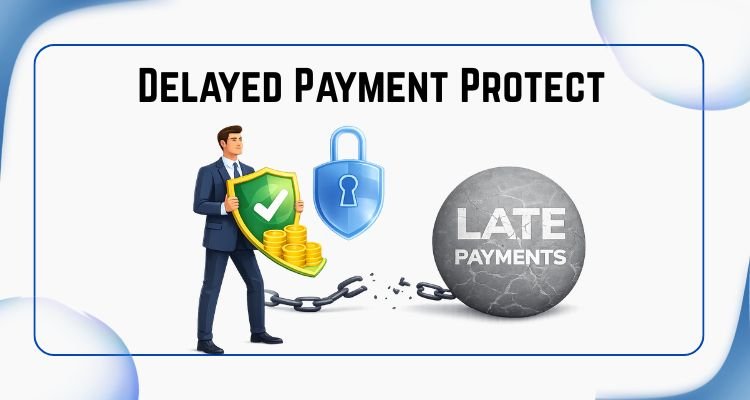
Delayed Payment Protection: Strong Shield for MSMEs
In today’s fast paced business environment, Micro and Small Enterprises (MSMEs) often face critical challenges particularly cash flow disruptions arising from delayed payments. While delayed payment can become the very survival of small businesses.
The Government of India recognizing this, it has empowered state-level Facilitation Councils under the MSME Development Act, 2006. These councils offer legal recourse through conciliation and arbitration to resolve payment disputes efficiently and effectively
What is Delayed Payment Protection
Delayed Payment Protection ensures that businesses registered under MSME receive payments within a fixed time period. If the buyer delays payment beyond the allowed limit, they become liable to pay additional interest on the outstanding amount.
It provide legal safeguard to MSME businesses to ensure timely payment from buyers i.e. within 45 days. It helps small businesses avoid cash flow issues by enforcing strict payment timelines and penalties on delayed payments.
There are several ways this protection manifests in the market today:
- Trade Credit Insurance (TCI)
This is the most comprehensive form of protection. If a customer fails to pay due to protracted default (they just won’t pay) or insolvency (they’ve gone bankrupt), the insurance provider covers a significant percentage of the debt—usually 80% to 95%.
- Invoice Factoring & Discounting
While often viewed as a financing tool, many factoring agreements include “non-recourse” clauses. This means the factor (the company buying your invoice) assumes the risk of non-payment. If the client doesn’t pay, the factor takes the hit, not you.
- Digital Payment Guarantees
Modern fintech platforms now offer “Buy Now, Pay Later” (BNPL) for B2B transactions. The platform pays the vendor immediately and takes on the responsibility of collecting the payment from the buyer over time
Delayed Payment Rules Under MSME
The MSME law defines clear payment timelines for buyers:
- Payment must be made within agreed time
- If no agreement, payment must be made within 15 days
- Maximum payment period cannot exceed 45 days
Any delay beyond this period is considered a delayed payment.
If payment is delayed, the buyer must pay:
- Compound interest on the due amount
- Interest rate up to 3 times the RBI bank rate
- Interest calculated from due date until payment
Why Delayed Payment Protection Matters for MSMEs Growth?
Delayed payment protection isn’t just about getting your money, it’s about predictability.
- Working Capital Stability: When you know your funds will return within 45 days, you can plan your next production cycle, buy raw materials, and pay your staff without taking expensive short-term loans.
- Negotiating Power: Being “Udyam Registered” tells your buyer that you are aware of your legal rights.
- Reduced Bad Debts: The threat of 3x interest and tax penalties significantly reduces the chances of a buyer delays payment or refusing to pay for minor, unjustified reasons.
Benefits of Delayed Payment Protection
MSME businesses get strong advantages from delayed payment protection:
- Guaranteed payment protection
- Legal right to claim interest
- Improved cash flow
- Reduced financial risk
- Better business stability
This protection is especially important for small businesses that depend on timely payments.
How to Choose the Right Protection for Your Business
Not every business needs a full-scale credit insurance policy. Choosing the right “shield” depends on your specific industry and client base.
- For Manufacturers: Trade Credit Insurance is vital here. With high overhead costs and large material outlays, a single massive unpaid order could lead to bankruptcy.
- For Freelancers & Service Providers: Consider milestone-based payments. By breaking a project into four parts and requiring payment before moving to the next phase, you protect yourself from losing the full value of your labor.
Strategies to Prevent Delays Before They Happen
- Clear Terms and Conditions: Never start work without a signed contract that explicitly states payment deadlines.
- Credit Checks: Before offering any service or product, check credit reporting agencies to see if they have defaulted any payment before.
- Early Bird Incentives: Offer a small discount if the invoice is paid within 7 days. It is often cheaper to give a small discount than to pay interest on a loan because your cash is tied up.
Who Can Use Delayed Payment Protection?
Any business can get protection under MSME:
• Micro Enterprises
• Small Enterprises
• MSME registered businesses
• Suppliers of goods and services
Businesses must have valid MSME Registration to claim protection.
Final Thoughts
Delayed payments can seriously affect the stability and growth of small businesses. With Delayed Payment Protection, MSME businesses get a strong safeguard of 45 days that ensures timely payments and reduces financial risk. By understanding and using this protection, businesses can maintain better cash flow, avoid unnecessary losses, and focus on long-term growth.