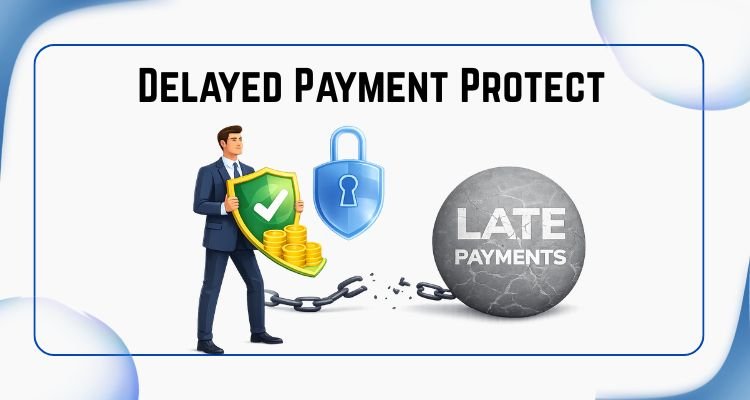
Delayed Payment Protection: Strong Shield for MSMEs
In today’s fast-paced business environment, Micro and Small Enterprises (MSEs) often face critical challenges—particularly cash flow disruptions arising from delayed payments. While selling on credit is commonplace, delayed or non-payment can jeopardize the very survival of small businesses. Recognizing this, the Government of India has empowered state-level Facilitation Councils under the MSME Development Act, 2006. These councils offer legal recourse through conciliation and arbitration to resolve payment disputes efficiently and effectively
What is Delayed Payment Protection
At its core, Delayed Payment Protection is a suite of services or insurance products aimed at mitigating the risks associated with credit sales. It essentially guarantees that you receive your funds, regardless of whether your client is experiencing a temporary cash crunch or facing insolvency.
There are several ways this protection manifests in the market today:
- Trade Credit Insurance (TCI)
This is the most comprehensive form of protection. If a customer fails to pay due to protracted default (they just won’t pay) or insolvency (they’ve gone bankrupt), the insurance provider covers a significant percentage of the debt—usually 80% to 95%.
- Invoice Factoring & Discounting
While often viewed as a financing tool, many factoring agreements include “non-recourse” clauses. This means the factor (the company buying your invoice) assumes the risk of non-payment. If the client doesn’t pay, the factor takes the hit, not you.
- Digital Payment Guarantees
Modern fintech platforms now offer “Buy Now, Pay Later” (BNPL) for B2B transactions. The platform pays the vendor immediately and takes on the responsibility of collecting the payment from the buyer over time
Why This Matters for Your Growth
Delayed payment protection isn’t just about getting your money; it’s about predictability.
Working Capital Stability: When you know your funds will return within 45 days, you can plan your next production cycle, buy raw materials, and pay your staff without taking expensive short-term loans.
Negotiating Power: Being “Udyam Registered” tells your buyer that you are aware of your legal rights. It changes the power dynamic from a “beggar” to a “partner.”
Reduced Bad Debts: The threat of 3x interest and tax penalties significantly reduces the chances of a buyer “ghosting” you or refusing to pay for minor, unjustified reasons.
Why “Human-Centric” Protection Matters
Many automated systems treat debt collection like a blunt instrument. However, in business, relationships are everything. Effective Delayed Payment Protection acts as a neutral third party. It allows you to maintain a positive relationship with your client while a professional system handles the financial logistics.
Instead of you being the “bad guy” demanding money, the protection framework provides a structured, professional expectation that payments are non-negotiable.
How to Choose the Right Protection for Your Business
Not every business needs a full-scale credit insurance policy. Choosing the right “shield” depends on your specific industry and client base.
- For Freelancers: Look for platforms that offer Escrow services or integrated “Late Fee” automation. Setting up a contract that automatically triggers a $5\%$ or $10\%$ penalty for every week a payment is late is a simple, low-cost form of protection.
- For Manufacturers: Trade Credit Insurance is vital here. With high overhead costs and large material outlays, a single massive unpaid order could lead to bankruptcy.
- For Service Providers: Consider milestone-based payments. By breaking a project into four parts and requiring payment before moving to the next phase, you protect yourself from losing the full value of your labor.
Strategies to Prevent Delays Before They Happen
While protection products are your safety net, your “front-line defense” should be your internal processes.
- Clear Terms and Conditions: Never start work without a signed contract that explicitly states payment deadlines (e.g., Net 15 or Net 30).
- Credit Checks: Before offering credit to a new client, do your homework. Use credit reporting agencies to see if they have a history of slow walking payments.
- Early Bird Incentives: Offer a small discount (e.g., $2\%$) if the invoice is paid within 7 days. It is often cheaper to give a small discount than to pay interest on a loan because your cash is tied up.
The Psychological Shift: From “Hoping” to “Knowing”
The biggest advantage of Delayed Payment Protection is often psychological. Business owners spend a significant amount of “mental bandwidth” worrying about money that hasn’t arrived yet. When you implement a protection strategy, that anxiety vanishes.
You shift from a defensive posture—wondering if you can afford next month’s rent—to an offensive posture, focusing entirely on how to provide better value to your customers and grow your brand.
Pro Tip: In the digital age, “the check is in the mail” is no longer an acceptable excuse. Moving your clients toward digital payment portals that support credit cards or ACH transfers reduces the friction that often leads to “accidental” delays.
Understanding the Issue: Why Delayed Payments Hurt MSMEs
Reliable cash flow is the lifeblood of MSMEs. Delays in payments—from lengthy approval processes to disputes—can:
- Deplete working capital
- Delay procurement of raw materials
- Disrupt payroll and overheads
- Hamper growth plans
Given their limited financial buffers, recovery of dues can mean the difference between growth and closure. Thus, prompt dispute resolution is not just desirable—it’s essential.
How the Small Business Commissioner Can Help
The SBC is an independent public body that provides free support and advice to small businesses dealing with late payment issues. Services include:
- Advisory Services – Guidance on how to prevent and manage late payments.
- Complaint Resolution – Assisting small businesses in resolving disputes with larger firms over unpaid invoices.
- Webinars and Educational Resources – Free workshops, webinars, and guidance on improving payment practices.
- Practical Steps to Avoid Late Payments
Final Thoughts
Delayed Payment Protection is no longer a luxury reserved for Fortune 500 companies. In an era of economic volatility, it is a fundamental requirement for any business that operates on credit. By securing your receivables, you aren’t just protecting a piece of paper; you are protecting your employees’ livelihoods, your professional reputation, and your future growth.
Don’t wait for a “bad debt” to ruin your year. Take proactive steps today to ensure that when you do the work, you get the reward.