Complete MSME Loan Guide in India
MSME (Micro, Small, and Medium Enterprises) loans are financial products designed to meet the funding needs of small businesses. These online loans are offered by various financial institutions like banks, non-banking financial companies (NBFCs), and microfinance institutions. The Indian government also provides support and incentives for MSMEs through schemes like the Credit Guarantee Fund Trust for Micro and Small Enterprises (CGTMSE).
MSME loans typically cater to businesses requiring capital for various purposes such as working capital, purchasing equipment, expanding operations, or investing in infrastructure. The loan amounts, interest rates, and repayment terms vary depending on factors such as the borrower’s creditworthiness, business plan, and the lender’s policies.
These loans often come with simplified application processes and reduced documentation requirements compared to loans for larger enterprises. Additionally, some government schemes offer favourable terms such as lower interest rates, longer repayment periods, and collateral-free loans to encourage entrepreneurship and support the growth of MSMEs.
However, it’s essential for MSMEs to carefully assess their financial needs, repayment capabilities, and the terms offered by different lenders before applying for a loan. They should also ensure compliance with relevant regulations and maintain good financial management practices to sustain and grow their businesses successfully.
Types of MSME Loans
Businesses can choose from different types of MSME loans:
- Term Loan: For business expansion and large investment
- Working Capital Loan: For daily business expenses
- Machinery Loan: For purchasing equipment
- Overdraft Facility: For short-term financial needs
Eligibility for MSME Loan
To apply for MSME loan, businesses must meet basic criteria:
- Business must be registered under MSME
- Applicant should be business owner or authorized person
- Business should have stable income
- Good credit history (in some cases)
- Required documents must be available
Documents Required for MSME Loan
Basic Documents required for MSME Loan Application:
- Aadhaar Card
- PAN Card
- Business Registration Proof
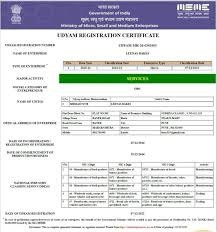
- MSME Registration Certificate
- Bank Statements
- Income Proof
- Business Address Proof
How to Apply for MSME Loan Application
To begin your MSME loan application process, you’ll typically need to follow these steps:
- Research and Choose a Lender: Begin by researching different financial institutions, banks, and online lenders that offer MSME loans. Compare interest rates, terms, eligibility criteria, and application processes to find the best option for your business.
- Check Eligibility: Review the eligibility criteria for the MSME loan offered by your chosen lender. Criteria may include the age of the business, annual turnover, credit score, etc.
- Gather Documents: Collect all necessary documents required for the loan application process. This may include business registration documents, financial statements, income tax returns, KYC documents, etc.
- Online Application: Visit the official website of the chosen lender or financial institution. Look for the section related to MSME loans or business loans and find the online application form.
- Fill out Application Form: Complete the online application form accurately, providing all required information. This typically includes details about your business, personal information, financial information, loan amount required, purpose of the loan, etc.
- Upload Documents: After filling out the application form, you’ll likely be asked to upload the necessary documents. Ensure that all documents are clear, complete, and meet the lender’s requirements.
- Submit Application: Review the information provided in the application form and the documents uploaded. Once you’re satisfied, submit the application.
- Wait for Approval: After submitting your application, the lender will review it along with the supporting documents. This process may take some time, depending on the lender’s internal procedures and workload.
- Loan Approval: If your application is approved, you will receive a notification from the lender. This notification may include details such as the approved loan amount, interest rate, repayment terms, etc.
- Loan Disbursement: Upon approval, the lender will disburse the loan amount to your designated bank account. Ensure that you carefully review the terms and conditions before accepting the loan.
- Repayment: Make timely repayments of the loan as per the agreed schedule to maintain a good credit history.
Remember to thoroughly research your options and choose a lender that best suits your needs. Additionally, it’s essential to maintain transparency and accuracy throughout the application process to increase your chances of approval.
Interest Rate For MSME Loan
The interest rate for MSME (Micro, Small, and Medium Enterprises) loans can vary depending on several factors including the lender, the borrower’s creditworthiness, the loan amount, and the prevailing market conditions. Generally, MSME loans may have lower interest rates compared to traditional business loans due to government initiatives and policies aimed at supporting small businesses.
In many countries, governments or financial institutions may offer subsidized interest rates or special loan programs specifically tailored for MSMEs to encourage their growth and development. It’s advisable for MSMEs to research and compare different lenders and loan products to find the best interest rate and terms that suit their specific needs and financial situation. Additionally, maintaining a good credit history and demonstrating strong financial performance can often help MSMEs negotiate better loan terms, including lower interest rates.
Who is eligible for MSME loan?
Eligibility criteria for MSME (Micro, Small, and Medium Enterprises) loans can vary depending on the lender and the specific loan scheme. However, here are some common eligibility factors:
-
- Type of Business: Your business should fall under the category of micro, small, or medium enterprise as defined by the government. These definitions may vary based on factors such as investment in plant and machinery or equipment, turnover, etc.
- Business Registration: Your business should be registered as a legal entity, such as a sole proprietorship, partnership, LLP (Limited Liability Partnership), private limited company, or any other legal form as per applicable laws.
- Turnover: Some lenders may have minimum and maximum turnover criteria for MSME loans. This indicates the annual sales turnover of your business.
- Credit Score: Your personal and/or business credit score may be considered by lenders to assess your creditworthiness. A good credit score indicates your ability to repay the loan.
- Business Vintage: Lenders may require your business to have been in operation for a certain period, typically ranging from 1 to 3 years, to demonstrate stability and viability.
- Compliance with Regulatory Requirements: Your business should comply with all applicable regulatory requirements, including tax filings, licences, permits, etc.
- Purpose of Loan: You should clearly specify the purpose for which you are seeking the loan, such as working capital, expansion, purchase of machinery/equipment, etc. The purpose should align with the objectives of the MSME loan scheme.
- Debt Servicing Capacity: Lenders will assess your business’s ability to generate sufficient cash flows to service the loan, taking into account factors such as profitability, existing debt obligations, etc.
MUDRA Loan
MUDRA (Micro Units Development and Refinance Agency) loans are aimed at providing financial assistance to micro-enterprises in India, particularly those in the informal sector, to support their growth and development. Here’s an overview of MUDRA loans:
-
- Objective: MUDRA loans aim to promote entrepreneurship, generate employment, and foster economic development by providing financial support to micro-enterprises, including small businesses, vendors, artisans, farmers, and entrepreneurs.
-
- Categories of MUDRA Loans: MUDRA offers loans under three categories, known as ‘Shishu’, ‘Kishor’, and ‘Tarun’, based on the stage of growth and funding requirements of the enterprise:
-
- Shishu: Loans up to Rs. 50,000, typically provided to micro-enterprises in the early stages of development.
-
- Kishor: Loans ranging from Rs. 50,001 to Rs. 5,00,000, suitable for businesses that have already started operations and need funds for expansion.
-
- Tarun: Loans ranging from Rs. 5,00,001 to Rs. 10,00,000, designed for established enterprises with higher funding requirements.
-
- Categories of MUDRA Loans: MUDRA offers loans under three categories, known as ‘Shishu’, ‘Kishor’, and ‘Tarun’, based on the stage of growth and funding requirements of the enterprise:
-
- Eligibility Criteria: Eligibility for MUDRA loans typically includes:
-
- The borrower should be an Indian citizen.
-
- The borrower should be engaged in income-generating activities such as manufacturing, trading, services, etc.
-
- The enterprise should fall under the definition of a micro-enterprise, as per MUDRA guidelines.
-
- Eligibility Criteria: Eligibility for MUDRA loans typically includes:
-
- Purpose: MUDRA loans can be utilised for various business purposes, including working capital needs, purchase of equipment/machinery, business expansion, setting up new units, and other business-related expenses.
-
- Interest Rates and Repayment Terms: Interest rates on MUDRA loans are typically competitive and may vary depending on the lending institution. Repayment terms also vary but are usually flexible, with options for monthly, quarterly, or half-yearly instalments.
-
- Application Process: Interested borrowers can apply for MUDRA loans through participating banks, microfinance institutions (MFIs), and non-banking financial companies (NBFCs) that are registered under MUDRA. The application process may involve submitting necessary documents, including business plans, KYC documents, and financial statements.
-
- Government Support: MUDRA loans are supported by the Government of India, which provides refinancing facilities to banks and financial institutions to encourage lending to micro-enterprises.
MUDRA loans have been instrumental in providing financial assistance to millions of micro-enterprises across India, empowering individuals to start and grow their businesses and contribute to economic development. Here are our list of services